
Ergonomics in the Classroom: Why Furniture Design Matters
5 min read · Ushapo Resources
Why classroom ergonomics matters
Furniture is easy to treat as a background detail — until it’s the wrong size. Research into classroom ergonomics consistently links properly fitted furniture to better posture and sustained attention, while poorly fitting desks and chairs are associated with fidgeting, discomfort and difficulty concentrating. For equipment learners sit in most of the school day, it’s worth treating desk and chair design as a teaching-and-learning decision, not just a purchasing one.
The desk-and-chair relationship
Good classroom ergonomics comes down to a few simple relationships: feet flat on the floor, knees roughly at a right angle, and forearms level with the desk surface when writing. When a chair is too high or a desk too low for the learner using it, the body compensates — slouching, leaning, or perching on the edge of the seat — often without anyone noticing why concentration is slipping.
Why one size doesn’t fit a whole school
A Grade 1 classroom and a Grade 12 classroom have almost nothing in common ergonomically, and even within a grade, learner heights vary. Schools that standardise on a single desk-and-chair size are, by definition, fitting most learners poorly. Multiple size bands — or adjustable-height options for combination classes — go a long way toward making furniture fit the learner, not the other way around.
Teachers need ergonomic consideration too
It’s easy to focus entirely on learner furniture and treat the teacher’s chair as an afterthought. Educators spend a full working day moving between standing at the front, crouching beside a learner’s desk, and sitting to mark or plan — a supportive, adjustable teacher chair matters for exactly the same reasons a well-fitted classroom desk does, over a much longer working day.
Small design details that add up
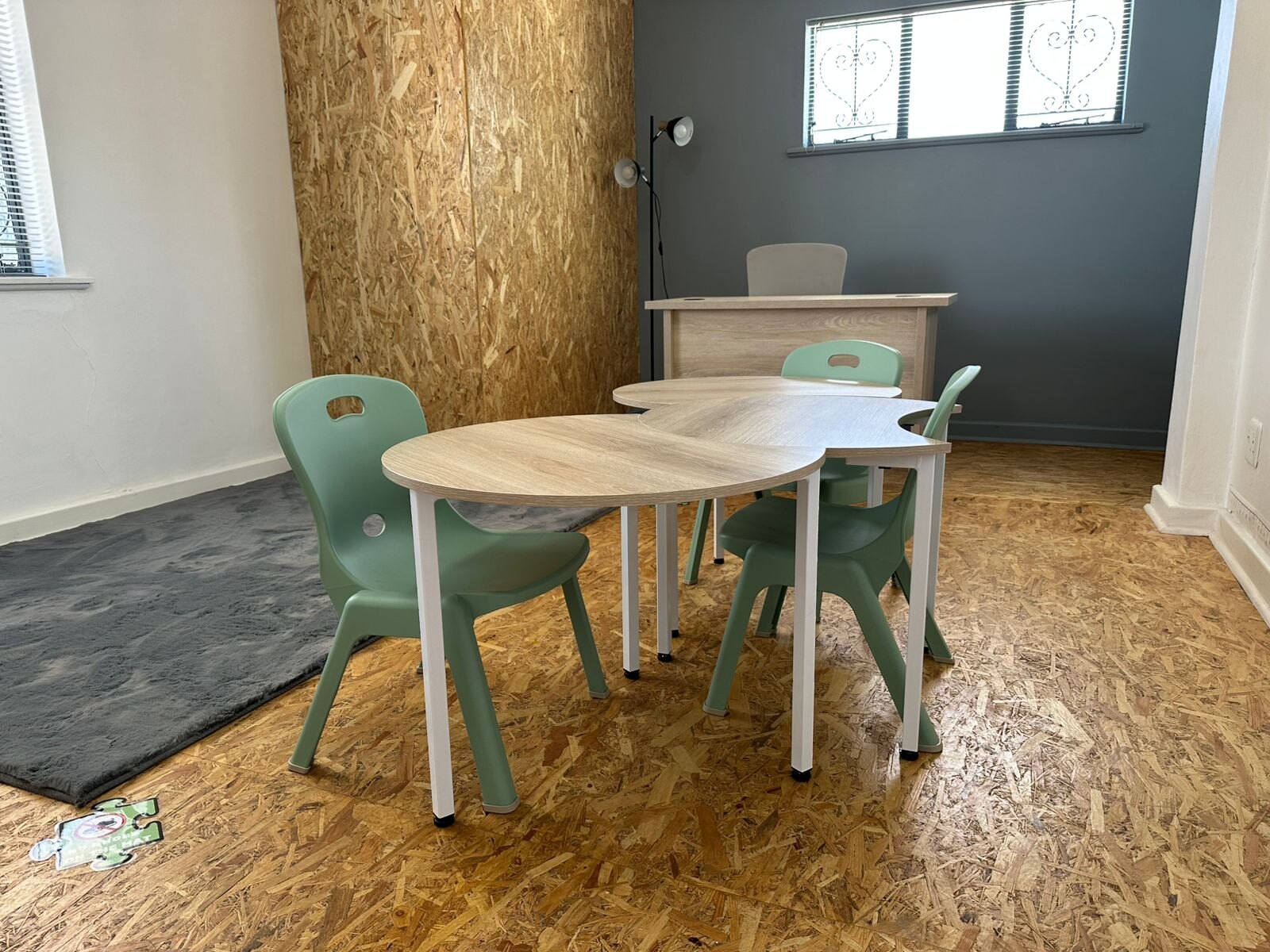
Beyond sizing, a few details make furniture genuinely learner-friendly: rounded edges for safety, stable four-point frames that won’t tip on uneven floors, non-slip feet that protect flooring, and chairs light enough for learners to move themselves. None of these show up on a spec sheet as “ergonomics” — but they’re where ergonomic design actually plays out in a real classroom.
Furnishing with posture in mind?
We’ll help you match sizing and seating to the learners who’ll use it.